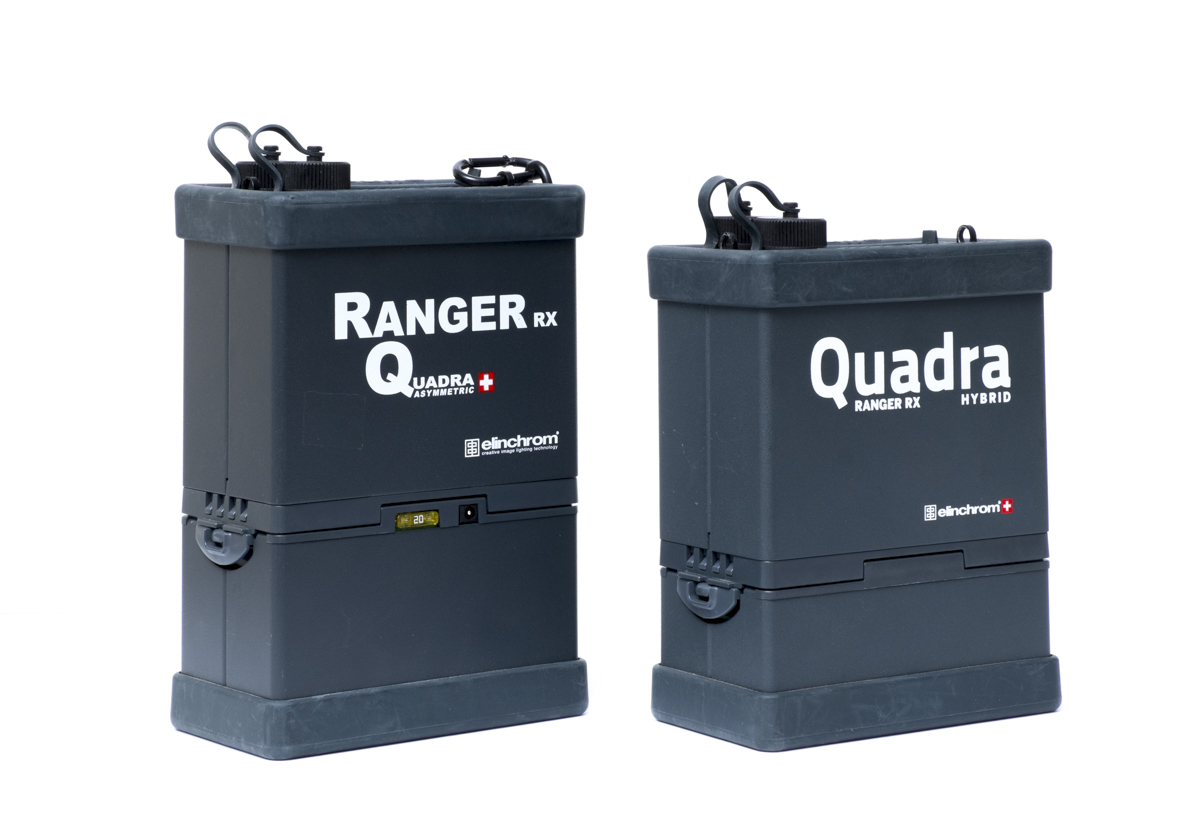
I got my first generation Elinchrom Quadra in 2010 and I
immediately fell in love with it.
I had been using
studio/AC strobes for years, but I was sick of the weight and having to be tied
to an outlet or generator. Shoe mount strobes were always a possibility, but
they were grossly underpowered and dealing with batteries was a pain. There
were a few high powered battery strobes, but they tended to be very heavy and
very expensive. Along came the Quadra and it felt like my prayers were
answered. Small, light, fairly powerful, not too much money, and best of all-
they had an LED modeling light which used very little juice. It was bright
enough to be of practical value and it didn’t drain the battery with the same
speed as the halogen ones in its bigger cousins.
I travelled all over Europe with those Quadras, shooting
portraits of small town shopkeepers and residents. They performed flawlessly.
At 400 watt seconds, they had plenty of power to give me the apertures
necessary. They set up quickly and I especially loved the modeling light.
Whether shooting in the low light of a hotel lobby at night
or in practically no light in the caverns of an 18th
century winery,
the LED modeling light was a
life saver allowing accurate focus and framing.
Later, I began using them with the ECO ring flash in
conjunction with my AC strobes. The ability to power way down and use the ring
as a fill in some fairly extensive lighting scenarios was extremely useful. The
quality of that fill is very different from using a traditional source or even
a bounce card as fill and it gave my work an interesting quality that was
difficult to define.
By 2012 Elinchrom had updated the
battery in the Quadra from a lead gel to a lithium ion battery.
What a difference! It was significantly smaller and
lighter, the number of flashes per charge was much greater, and the recycle time was reduced. These were all
welcome improvements.
Now it’s 2015 and I’ve been working with the latest version,
the ELB 400, for a couple of months.
This time the improvements to the Quadra,
while still not revolutionary, represent significant improvements. I must
admit, I was very happy with the previous iterations, but this new ELB is
really way ahead of the older Quadra Hybrid.
The first thing you notice after unboxing the ELB is that
the top panel looks very different from the Hybrid.
Elinchrom has replaced the hard plastic screw covers
on the head outlets with quick flip rubber covers. I wouldn’t consider this a
big deal, but it does make set up and tear down that much quicker.
Next, you’ll notice that there are two small outlets on the
right side of the panel. One is for the synch cord, but the other is a mini-usb
outlet for future firmware upgrades. My guess is that this will make it easy
for Elinchrom to add more hyper-sync (the ability to shoot with strobes at a
shutter speed higher than the normal limit of 1/160-1/250) and TTL (through the
lens metering) capabilities in the future. But there may be other features I
haven’t even dreamed of that could be added.
The biggest change to the top panel is the reduction and
simplification of the controls. The older unit had seven buttons and five
glowing indicators in addition to the power display and battery meter. The menu
system was fairly cumbersome and un-intuitive. This didn’t bother me too much
since I rarely had a need to change my settings, but when I did, using the
manual was absolutely necessary. Even then I sometimes got confused.
The new panel has reduced the buttons to six and an OLED
(organic light emitting diode) display. Besides simplifying operation, the best
part is that the OLED speaks English and is very intuitive. In fact, it’s
modeled after the menu system in the ELC AC strobes, so it felt very familiar
to me. There’s really no need for the manual- although I plan to keep mine
close by for a while, just in case. It’s really easy to scroll through the
options of: 1. photocell 2. skyport 3. audio 4. flash mode 5. power settings 6.
statistics
These menu choices give an indication of some of the
internal improvements to the ELB. The first three are items we’ve all come to
expect from quality studio strobes- an optical slave that we can turn off and
on, built in wireless support, and a variety of audio settings. The fourth,
flash mode, is a major addition. This adjustment lets you choose between
standard operation, delayed synch, sequential firing, or stroboscopic firing.
I’ve been using the ELB for fairly traditional location photography, but these
new settings will be a huge advantage for action sports shooters, allowing them
to do multiple exposures and motion studies in ways previously difficult or
even impossible without a truckload of gear and assistants. These options have
been available in the Elinchrom ELC series for some time. If you’d like to read
about my uses of the ELC go to
http://forestmcmullin.blogspot.com/2014/05/new-elinchrom-elc-pro-hd-review.html
There are some fairly significant internal changes to the
ELB that I’m very happy about, too. The first is that between an increase in
power from 400 watt seconds to 424 and the introduction of the Pro Head, I’m
getting almost a full stop more juice out of the unit. The Quadra Hybrid had
plenty of power for most of the things I did with it, so what this means is
that I can reduce the output for my shots, thus getting many more pops per
charge out of the already large capacity lithium battery. I don’t have the
patience to accurately test exactly how many pops I’m getting, but I estimate
that at 50-70% power, I’m getting well over 500 pops- enough for most days of
shooting.
The recycle time has been reduced, too. From full discharge
to 100% ready, the original Quadra took almost 2.5 seconds to recycle. Not bad
at all. With the introduction of the Hybrid, that was down to just under two
seconds. Now with the ELB, recycle time is just over 1.5 seconds. I’m a people
shooter and having a recycle time that fast is enormously helpful. My most
recent projects have necessitated shooting in very public situations (flea
markets and rodeos) and the faster I can shoot and let folks get back to
whatever they need to be doing, the better.
One of things that sold me on the original Quadra, still
holds true of the ELB- it’s easy to use all of Elinchrom’s modifiers with it.
There’s a convenient adapter that lets me use all of my softboxes, grid spots,
beauty dishes, and octabanks with this little powerhouse. I think Elinchrom
makes the best modifiers out there and there have been many times when the
ability to pop one of my “baby” heads into a sophisticated modifier has been a
lifesaver.
Lately my work has leaned heavily toward a documentary approach
and the ELB is the perfect tool. It allows me the versatility and power of
larger, heavier strobes in a package that’s easy to carry and quick to set up
and tear down. There are photographers out there who rave about the results
they get from using multiple shoe mount strobes and I don’t disagree that it’s
possible to do that. But for the money you can spend on three or four of the
top of the line shoe mounts, you can get a pretty complete ELB system with two
heads and batteries. It will give you way more power and flexibility than the
shoe mounts ever could. And you won’t have to invest in hundreds of AA
batteries anymore, either.
The following shots show a few of the things I’ve been doing
with the ELB and Hybrid. I’ve been using a 17 inch silver beauty dish for a lot
of it. I really like the sparkle and punch of that modifier used in daylight
situations. The African American cowboy series uses the Ringflash ECO for fill.
Shooting on sunny days, people with dark skin wearing cowboy hats is a real
challenge trying to get detail in my subjects eyes. The ring on low power opens
those shadows just enough without over powering the effect of my main light.
If you have any suggestions or questions about anything in this review, please contact me. I'll get back to you as soon as possible.
Read more about Elinchrom and their products
here.
If you'd like to see more of my work, go
here.
(above photo by Hastings Huggins, http://www.hastingshugginsworks.com/)
(above photo by Joshua McFadden, http://www.joshuarashaad.com/)