Sunday, May 18, 2014

Mena Ethopian Restaurant

I visited Mena, 3680 Clairmont Rd. near Buford Highway, on the spur of the moment. I had been shooting in a Cuban place and someone mentioned that there was an Ethiopian restaurant across the street. I went over to check it out and it took a little time to realize it was in the back of the Bethlehem Food Store through an unmarked door on the side. Not a terribly auspicious start, but once inside I was greeted with wonderful smells. There's a large dining room with a full bar in the center and the walls are a riot of bright colors.
Fuji X-E1, 18-55mm lens, ISO 1600, 1/45 @ f/3.2

There's a dimly lit back room with a hookah bar.
Fuji X-E1, 18-55mm lens, ISO 3200, 1/2 @ f/3.2
And off to one side, a woman was crouched on the floor roasting coffee beans.
Munu Wasse roasting coffee, Fuji X-E1, 18-55mm lens, ISO 2000, 1/17 @ f/2.8 
This, I learned, is a traditional Ethiopian ceremony and ritual. I sat and asked my waitress what she recommended. She liked the gored gored, she told me, so that's what I had. I was a little surprised when she brought a plate of cubed and spiced raw beef.
Fuji X-E1, 18-55mm, ISO 200, 1/30 @ f/6.4
After getting over my initial hesitance, I was delighted. It was very tender and delicate. I used the slightly sour injera bread as a scoop and dipped it in mitmita  and other spices. I later learned it is very popular in both Ethiopia and Eritrea and is considered a national dish. I finished it completely satisfied. I plan to return and try other (cooked!) dishes, but I'm not sorry I tried the gored gored.
Miheret Bekele, Fuji X-E1, 18-55mm, ISO 1600, 1/25 @ f/3.2

Friday, May 9, 2014

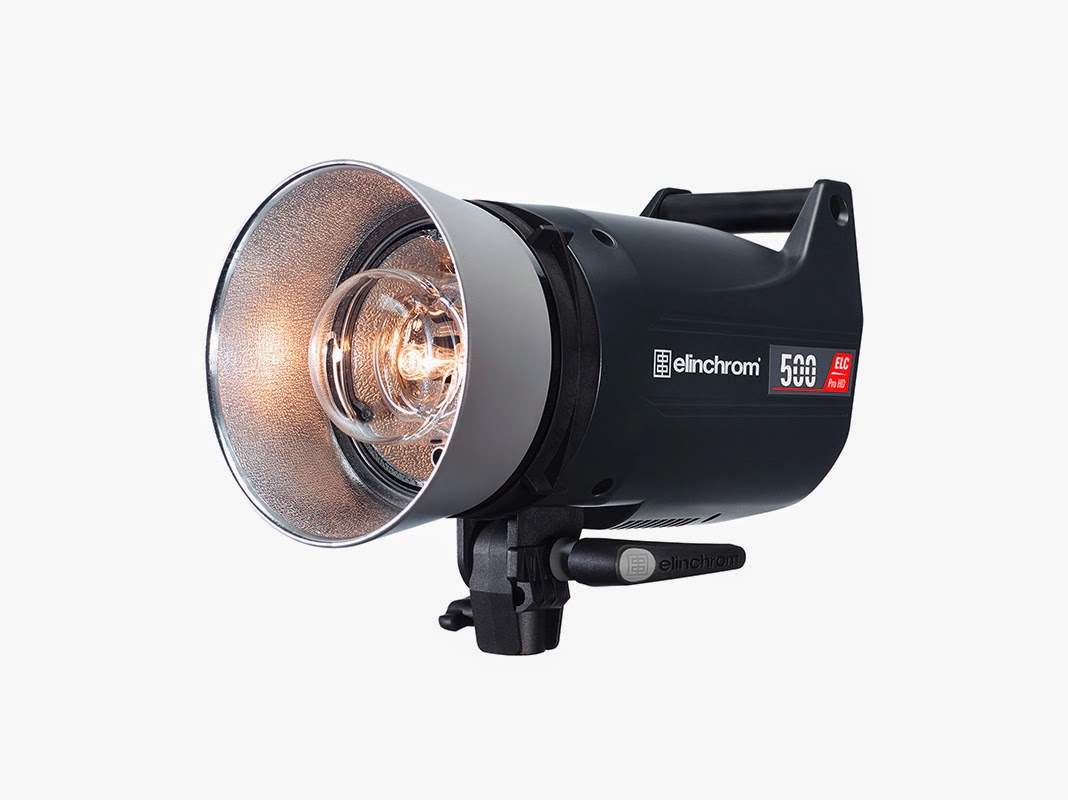
New Elinchrom ELC Pro HD Review- A Lot of Technology in a Compact Package

I've been using the new Elinchrom ELC Pro HD strobes for a few weeks now. My friends at Manfrotto Distribution and Elinchrom were nice enough to send me both the 500 watt second unit and the 1000 watt second unit to test. I've been using their Style RX strobes for several years now and when they told me they were updating them, I remember saying to myself, well, that's nice, but the only thing I could think of that they needed was to build the Skyport receiver into the unit instead of having to plug in an adapter. Boy! Was I wrong! The ELCs are a serious overhaul and upgrade to the RXs.
At first glance, they look pretty much the same as the RX 600WS model. Although they're slightly larger (about an inch longer and little bit bigger around) they actually weigh less than the comparably powered RXs. The 1000WS unit is exactly the same size as the 500, too, which is especially nice when you look at the giant size of the older 1200WS RX.

The front of of the ELCs looks like what you'd expect. The only changes from the RX is that they've added a protective dome and the wattage of the modeling light has been increased from 150 watts to 300. The bright modeling light in the ELC generates a lot of heat, but it's no problem, partly because the cooling fan in the unit is extremely efficient. It's also very quiet- so quiet that you have to listen closely or you won't realize it's on.

The back is significantly different from the RX.
The biggest change is the OLED menu readout. If all you want to do is shoot with basic use, it's easy to do just that. Left and right arrows change the power up and down in full stops. The center dial, glowing green in the picture above, changes the power in tenths of a stop. Speaking of power, the strobes re-cycle VERY fast. The 1000WS recycles in under two seconds- 1.7 sec. by my measurements and 1.8 sec. stated in the Elinchrom specs. On lower power settings, of course it's much, much faster.

As I said above, these lights will perform admirably in the vast majority of "normal" uses. But the reason it has a menu system is that there are a couple of features built in that are very cool. The first one is that it is designed to have short- very short- flash durations. Many photographers don't realize that different strobes have different flash durations. For most brands and models, this may range from as slow as 1/300 of a second to much faster, say 1/2,000 of a second. And that duration changes depending on the power setting. For many kinds of shooting, the flash duration is relatively unimportant. The problem is when you're shooting something moving quickly and you want to freeze the motion- say a splash or a dancer leaping. If the duration isn't short enough, there will be some blur.

The ELCs not only have short durations, but the exact duration reads out on the menu. You can see what the duration is at every, single power setting. This allows you to adjust the power to find the balance between what f/stop you need and the duration that is fast enough to freeze whatever action you're capturing.


I'm just starting to play with this and I hope to have more pictures to post soon.

The other feature the ELCs have is a stroboscopic function. This allows you to set them from firing one time per second to as fast as 20 times per second. You can set the time of the burst from 1 second to 4 seconds. The following shot was my first effort. Joe was practicing his serve and I set the lights to fire 15 times per second for one second.


With the very talented Deborah Hughes in the studio, I thought I might try some motion studies with her, too. In the first, I just had her dance across the frame. The ELCs were set to fire 10 times per second for 2 seconds.


But then she showed me some fabric she had brought with her. Now the magic began. . .


I can't wait to get Deborah back so we can keep playing with this. I want to try it with different colors, with multiple dancers- there are tons of possibilities. They also have a sequencing function that allows the user to time up to twenty different strobes with a pre-programed  delay.

These effects aren't unique. There have been strobes that have done this for some time. The big difference is that, as far as I know, these are the first ones that can do it in completely customizable ways and at a very reasonable price. The ELCs will be available for about $1050 for the 500WS and $1450 for the 1000WS when they start shipping in the US in June. That's less than one fifth the price of other strobes that can do the same things. In fact, that would be a good price for monoblocs that don't have all these special features.

I really can't wait to continue working with the ELCs. They're excellent performers for regular shooting. And their special features are giving me lots of ideas on new ways to shoot. I really think these lights are winners.

Sunday, March 30, 2014

#19 from Out on Buford Highway

Way back in September, the third post I put up from this project was shot early in the morning at La Chiquita Cafe. A couple of weeks ago, I finally went back and shot inside. The owner, Jose Lopez was nice enough to let me shoot a portrait.
Jose Lopez, Fuji X-E1, 18-55mm lens, ISO 800, 1/140 @ f/3.2

Fuji X-E1, 18-55mm lens, ISO 800, 1/220 @ f/2.8

Sunday, March 16, 2014

#18 from Out on Buford Highway

Contigo Peru at 3567 Chamblee Dunwoody Road is a little off Buford Highway, but it was good enough that I thought I should include it here. It's a Peruvian seafood restaurant. The day I was there it was virtually empty when my friend and I arrived around 1:30 in the afternoon. We both had the pescado sudado, a fish stew common in northern Peru. It came as a decent sized piece of white fish swimming in a broth of tomato, onions, peppers, garlic, and a melange of herbs and spices. It was truly delicious! It came with a side of rice that I slowly added to the stew to soak up the broth. The price is reasonable at around $15.

By the way, make sure you look at all the pictures, because my favorite is the last one.

Pentax K-3, 16-50mm, ISO 200, 1/1000 @ f/8

Pentax K-3, 16-50mm, ISO 800, 1/125 @ f/5.6
Lis Ramires, Pentax K-3, 16-50mm, ISO 1600, 1/60 @ f/4.5
Hector Esquivel, Fuji X-E1, 18-55mm, ISO 1600, 1/100 @ f/4
Maria Ordonet, Fuji X-E1, 18-55mm, ISO 1600, 1/180 @ f/3.2
Maria Ordonet, Fuji X-E1, 18-55mm, ISO 1600, 1/100 @ f/3.2

Sunday, March 2, 2014

My New Toy

The other night, Andrea and I got home around 10:00PM after a long day and I discovered a box addressed to me that had been delivered earlier. Inside was a device called the Theta made by Ricoh. After poking around the limited instructions and looking at this little thing, I realized it was a small camera that had fish eye lenses on both sides and, when viewed with their software, made a 360 degree, spherical photograph. That's right, not a horizontally stitched, 360 panorama, but vertically, too. SPHERICAL! You can scroll up, down, sideways- every which way!

I've been playing with it for the last couple of days and I can't wait to spend more time experimenting. I plan to take it with me to Baltimore for the SPE National Conference and I can already imagine using it on the plane. at the hotel, on the street. I'll be posting them to my Tumblr. If you want to follow it, the title is Theta 360. Please check it out. In the meantime, here's a few of my early attempts:
At the High - Spherical Image - RICOH THETA

Baggage - Spherical Image - RICOH THETA
At BWI - Spherical Image - RICOH THETA

Sunday, February 23, 2014

New Line of Manfrotto Bags- Part 2

The new line of Manfrotto Professional bags I wrote about a while back includes five Shoulder Bags in sizes from the 10 to the 50. Like the Professional Backpacks, the Shoulder bags are well designed, well built and have a number of interesting, even unique, features.

The biggest difference between these bags and the older "Domke" style shoulder bags I used in the distant past is that the shell is made from the same semi-rigid material I described in my review of the backpacks. It gives structure to the bags and offers a high degree of protection. Many of the details are what we've come to expect on any high quality bag. A well padded shoulder strap and lots of pockets are there.
It has a couple of features that are unusual, if not unique. One is the way the internal sections are structured. They have a sort of hinge built in that allows a multitude of usable options, like having a camera at the ready with the lens pointing downward and stacking lenses with a padded section between them for protection.
The top lid has a weather sealed zippered slit, which let you get in and out quickly and easily if you find yourself changing lenses often. It's a nice touch and works faster than opening the lid to get things out.
The bags all have slots for laptops and/or tablets depending on the size of the bag. I tested the 10, 30 and 50. I particularly like the 10 since I'm using the Fuji X-E1 more and more. The 30 is a nice size, too, for when I'm using my Nikon or Pentax. The 50 is a behemoth! I can't imagine actually using it and trying to work off my shoulder. It's so big, that when it's loaded it's very heavy. I think it's probably more of a gear bag that has a shoulder strap to facilitate taking it short distances- not all day!

My only complaint about these bags- and it's a small one- is that there aren't any velcro tabs to make entry quicker that the zippers for situations when speed is important. Other than that, these are excellent additions to the marketplace. Well designed, well built, and very usable bags.

New Elinchrom Monoblocs

Elinchrom has just announced a new series of monoblocs, upgrading the top of the line Style RX. The new ELC Pro HD comes in 500ws and 1000ws maximum power. The major changes include much faster recycling (.6 seconds for the 500 and 1.2 seconds for the 1000) and very short flash durations. They're rated at 1/1430 at full power and as fast as 1/5260 at lower powers. That's fast! They have the wireless Skyport system built in. They also have several advanced features for the demanding pro shooter, including a stroboscopic setting that let's photographers do multiple exposure motion studies.

Shipping and prices haven't yet been announced. I'll post about them as soon as I hear. And I'll be giving them a thorough testing and writing about that as soon as I can get my hands on some.

Stay tuned!